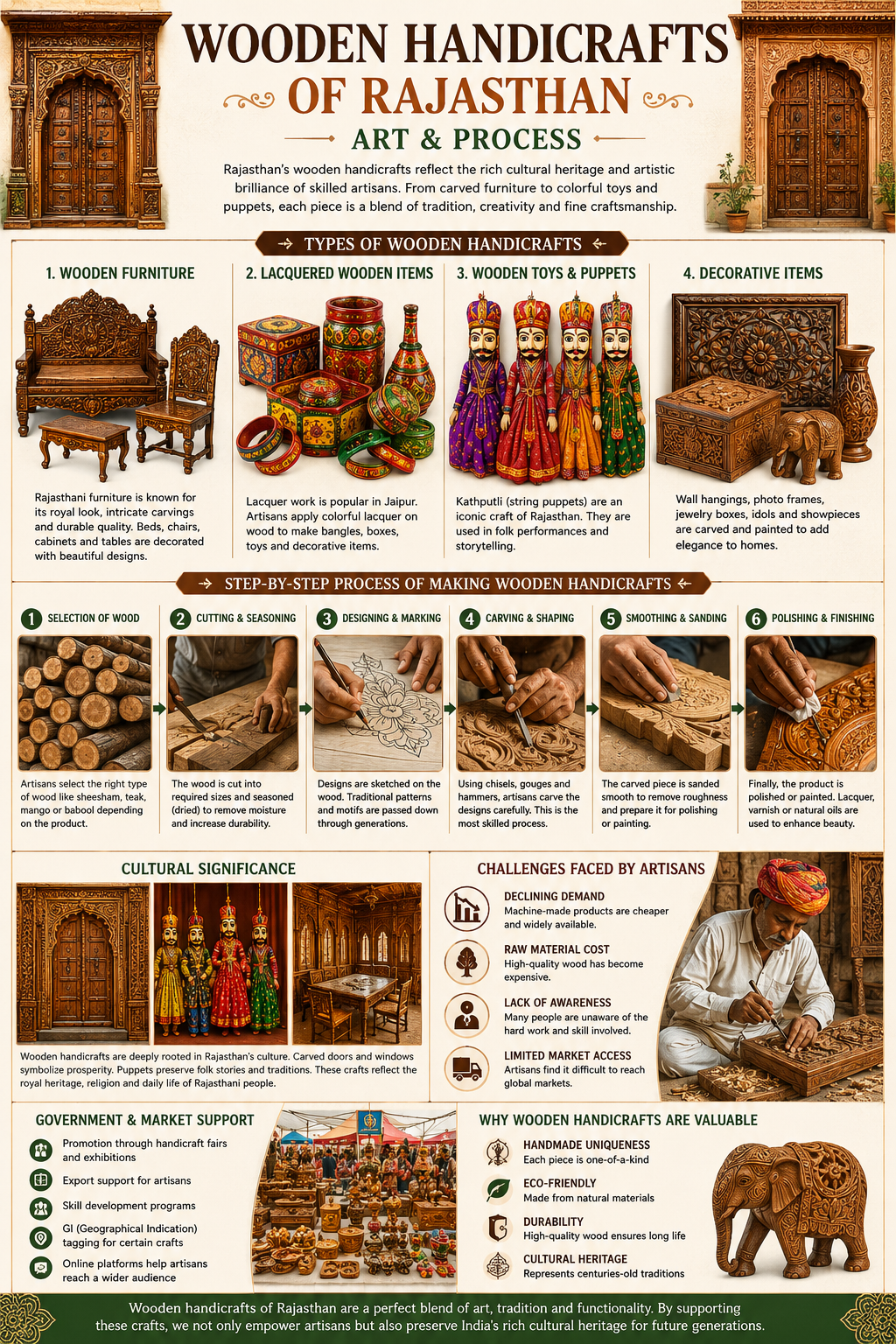
Wooden Handicrafts of Rajasthan: Art & Process
Introduction
Rajasthan, known for its royal heritage and vibrant culture, is also a treasure trove of traditional crafts. Among these, wooden handicrafts hold a special place due to their intricate craftsmanship, cultural symbolism, and timeless appeal. From beautifully carved furniture to colorful toys and decorative items, wooden handicrafts of Rajasthan reflect the artistic brilliance of skilled artisans who have preserved these traditions for generations.
Traditional Wooden Craftsmanship in Rajasthan


Woodworking in Rajasthan dates back centuries, influenced by royal patronage during the rule of Rajput kings. The palaces and havelis were adorned with elaborately carved wooden doors, windows, and furniture. Cities like Jodhpur, Jaipur, Udaipur, and Bikaner became centers of excellence for woodcraft.
Artisans use locally available woods such as teak, sheesham (Indian rosewood), mango wood, and babool. Each type of wood has unique characteristics that influence the final product’s durability, texture, and finish.
The beauty of Rajasthani wooden handicrafts lies in their detailing—floral patterns, geometric motifs, mythological scenes, and depictions of royal life are commonly carved into the wood.
Types of Wooden Handicrafts


Rajasthan offers a wide range of wooden handicrafts, each reflecting unique artistry:
1. Wooden Furniture
Rajasthani furniture is known for its royal and antique look. Items like beds, chairs, cabinets, and tables feature heavy carvings, brass inlay work, and hand-painted designs.
2. Lacquered Wooden Items
Lacquer work involves applying colorful lacquer on wooden surfaces. This technique is especially popular in Jaipur, where artisans create vibrant bangles, boxes, and toys.
3. Wooden Toys and Puppets
The famous Kathputli (string puppets) are an iconic craft of Rajasthan. These wooden puppets are dressed in traditional attire and used in storytelling performances.
4. Decorative Items
Wall hangings, photo frames, jewelry boxes, and idols are popular decorative products made from wood. These items often feature intricate carvings and hand-painted details.
Step-by-Step Process of Making Wooden Handicrafts


The creation of wooden handicrafts involves multiple stages, each requiring precision and skill:
1. Selection of Wood
The process begins with selecting the right type of wood. Sheesham and teak are preferred for furniture due to their strength, while lighter woods are used for toys and decorative items.
2. Cutting and Seasoning
The wood is cut into required sizes and then seasoned (dried) to remove moisture. This prevents cracking and ensures durability.
3. Designing and Marking
Artisans sketch designs directly onto the wood. Traditional patterns are often passed down through generations.
4. Carving and Shaping
Using tools like chisels and hammers, artisans carefully carve the designs. This is the most time-consuming and skill-intensive stage.
5. Smoothing and Sanding
The carved piece is sanded to achieve a smooth surface, preparing it for finishing.
6. Polishing and Finishing
Finally, the product is polished or painted. Lacquer, varnish, or natural oils are used to enhance the appearance and protect the wood.
Cultural Significance


Wooden handicrafts in Rajasthan are more than just decorative objects—they are deeply rooted in the region’s culture and traditions. Carved wooden doors and windows symbolize prosperity and artistic excellence. Puppets are used in folk storytelling, preserving local legends and moral tales.
These crafts also reflect the lifestyle and values of Rajasthani society, often depicting themes of royalty, religion, and daily life.
Challenges Faced by Artisans
Despite their beauty and cultural value, wooden handicrafts face several challenges:
- Declining Demand: Machine-made products are cheaper and widely available.
- Raw Material Cost: High-quality wood has become expensive.
- Lack of Awareness: Many consumers are unaware of the craftsmanship behind handmade items.
- Limited Market Access: Artisans often struggle to reach global markets.
Government and Market Support
To preserve this heritage, various initiatives have been introduced:
- Promotion through handicraft fairs and exhibitions
- Export support for artisans
- Skill development programs
- GI (Geographical Indication) tagging for certain crafts
Online platforms have also helped artisans reach a broader audience, increasing appreciation for handmade products.
Why Wooden Handicrafts Are Still Valuable
Wooden handicrafts from Rajasthan are valued for several reasons:
- Handmade Uniqueness: Each piece is one-of-a-kind
- Eco-Friendly: Made from natural materials
- Durability: High-quality wood ensures long life
- Cultural Heritage: Represents centuries-old traditions