How to Spend a Few Days Visiting Coast
Mi sit montes, aenean tempor sollicitudin volutpat viverra. Tellus amet, vitae ac consectetur blandit at. Odio proin elit, vehicula morbi faucibus vestibulum. Praesent sed pulvinar posuere nisl tincidunt. Iaculis sit quam magna congue.
What is a Leheriya Saree?


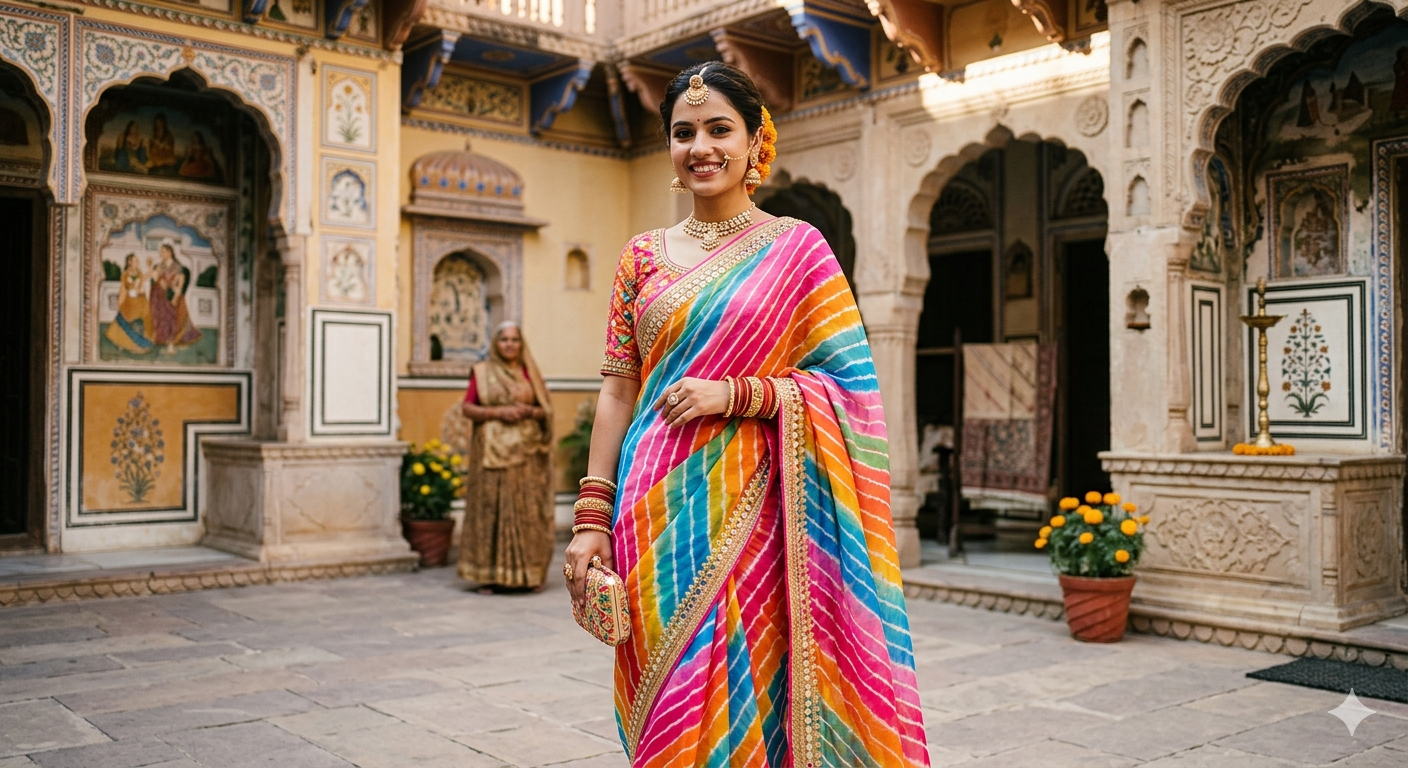
A Leheriya saree is a traditional Indian saree known for its distinctive wave-like patterns. The word “Leheriya” is derived from the Hindi word “lehar,” meaning “wave.” True to its name, this saree features flowing, diagonal stripes that resemble ripples on water, creating a visually dynamic and vibrant appearance.
Leheriya is a specialized form of tie-dye technique, closely related to Bandhani. The process involves rolling the fabric diagonally and tightly tying it at regular intervals before dyeing. Once the threads are removed, the fabric reveals stunning wave-like patterns.
These sarees are widely worn during festive occasions such as Teej, Raksha Bandhan, and weddings. Their bright colors and lively designs symbolize joy, celebration, and the cultural richness of India.
🏜️ Origin of Leheriya Saree


Leheriya sarees originate from the vibrant desert state of Rajasthan, particularly from cities like Jaipur, Jodhpur, and Udaipur. This art form dates back several centuries and is deeply rooted in the cultural traditions of the region.
Historically, Leheriya fabrics were favored by royalty and aristocratic families of Rajasthan. Members of royal households often wore these colorful textiles as a mark of elegance and status. Over time, the craft became more accessible and is now enjoyed by people across different regions and social backgrounds.
Leheriya also holds a strong association with the monsoon season. In a predominantly arid region like Rajasthan, the arrival of rain is celebrated with great enthusiasm. The wave patterns of Leheriya symbolize water and rainfall, making these sarees especially popular during monsoon festivals.
🎨 How Leheriya Sarees are Made
The making of a Leheriya saree is a meticulous and skill-intensive process that reflects the expertise of traditional artisans.
1. Fabric Selection:
Lightweight fabrics such as cotton, chiffon, georgette, and silk are commonly used. These materials allow the dye to spread evenly and enhance the clarity of patterns.
2. Rolling & Tying:
The fabric is diagonally rolled from one end to the other and then tightly tied with threads at regular intervals. This step determines the final design pattern.
3. Dyeing Process:
The tied fabric is dipped into dye baths. For multi-colored designs, the process of tying and dyeing may be repeated several times using different colors.
4. Drying & Unfolding:
After dyeing, the fabric is dried and carefully untied. Once opened, it reveals the characteristic wave-like stripes.
Since much of this process is done by hand, each Leheriya saree is unique and carries the mark of individual craftsmanship.
👗 Styling Tips for Leheriya Saree


Leheriya sarees are incredibly versatile and can be styled in both traditional and modern ways.
1. Blouse Selection:
- Pair a multi-colored saree with a plain blouse for balance
- Choose contrasting colors for a bold, eye-catching look
- Experiment with modern styles like crop tops or halter neck blouses
2. Jewelry Pairing:
- Traditional jewelry such as kundan or polki enhances the ethnic appeal
- Oxidized silver jewelry adds a contemporary touch
- Minimal jewelry works well for a subtle and elegant look
3. Footwear Choices:
- Mojaris or juttis for a traditional vibe
- Heels or wedges for formal or festive occasions
4. Draping Style:
- Classic Nivi drape for a timeless appearance
- Seedha pallu for a traditional Rajasthani look
- Belted drape for a modern, fusion style
5. Occasion-based Styling:
- Festivals: Bright colors with statement jewelry
- Casual wear: Light fabrics with minimal accessories
- Weddings: Silk Leheriya sarees with embroidered blouses
🌟 Why Leheriya Sarees Remain Popular
Leheriya sarees have maintained their popularity due to their timeless aesthetic and cultural significance. They beautifully combine tradition with contemporary fashion. Today, designers incorporate Leheriya patterns into a wide range of garments, including suits, dupattas, and fusion wear.
With the rise of social media and fashion influencers, Leheriya has gained renewed attention among younger generations. It is no longer seen as just traditional attire but also as a stylish and trendy fashion statement.
Additionally, Leheriya sarees support sustainable fashion practices. Being largely handcrafted and often dyed using traditional methods, they promote artisanal skills and eco-friendly production.
🧵 Conclusion
A Leheriya saree is more than just a garment—it is a reflection of Rajasthan’s rich cultural heritage and artistic excellence. Its wave-like patterns symbolize movement, joy, and the beauty of nature. Whether styled traditionally or with a modern twist, a Leheriya saree remains a versatile and elegant addition to any wardrobe.
For anyone looking to embrace color, culture, and craftsmanship, the Leheriya saree is truly a timeless choice.
.
Velit dignissim pharetra ut augue. Nunc felis neque non sagittis. Sodales eros suspendisse scelerisque varius neque elit elementum quis. Ut euismod id auctor donec consectetur massa. Sed vitae accumsan lorem pharetra dictum eget vestibulum. Non blandit viverra laoreet amet, maecenas auctor leo justo, sit. Vitae vulputate gravida est feugiat. Adipiscing tristique mauris, eu sit tortor. Velit in scelerisque sit tincidunt habitant urna nec. Justo, non massa metus convallis cursus lorem volutpat eu duis. Ipsum dolor feugiat est tristique.
Praesent sed pulvinar posuere nisl tincidunt. Iaculis sit quam magna congue. Amet vel non aliquet habitasse. Egestas erat odio et, eleifend turpis etiam blandit interdum. Nec augue ut senectus quisque diam quis. At augue accumsan, in bibendum. A eget et, eget quisque egestas netus vel. Velit, aliquet turpis convallis ullamcorper. Scelerisque sagittis condimentum pretium in vitae etiam lacinia quis amet. Porttitor consequat, sollicitudin vivamus pharetra nibh faucibus neque, viverra. Praesent amet sed lacus vitae.
Velit parturient tellus tellus, congue pulvinar tellus viverra. In cum massa mattis ac. Amet vitae massa ut mi etiam. Auctor aliquam tristique felis donec eu sit nisi. Accumsan mauris eget convallis mattis sed etiam scelerisque.